
Simplified Overview (ELI5)
Written by Abrar Akhunji
The digital world is chaotic. For years, we’ve watched AI models struggle to do anything complicated. Ask them to plan a trip or organize a dinner party, and they usually get confused halfway through and forget what they were doing. We’ve been waiting for a hero—a smart assistant capable of actual independence.
On July 9, 2026, Meta Superintelligence Labs delivered exactly that.
Enter Muse Spark 1.1. This isn't just another chatbot that you ask for a recipe. It's an "agent"—meaning it can actually do things for you on your computer. Alongside it, Meta released something called the Meta Model API, which basically lets anyone who builds apps plug this super-smart brain directly into their own software.
The Secret Weapon: A Perfect Memory
To be a truly helpful assistant, you need a flawless memory. Muse Spark 1.1 has what's called a 1 million token context window.
Imagine a master detective trying to solve a sprawling, city-wide conspiracy. A normal AI is a detective with amnesia. They can only remember the last few clues they looked at. If a clue from day one becomes important on day ten, they are completely lost.
Muse Spark 1.1 is a detective standing in front of an infinitely large corkboard connected by red string. Not only can they instantly recall a clue they saw months ago, but they actively organize the board, throwing away useless receipts while pinning the critical evidence right in the center so they never lose the plot.
The Brain That Sees and Hears
This hero doesn't just read words—it sees, hears, and acts all at the same time. It can watch a video and perfectly describe what's happening. But its real superpower is doing something about it.
Check out this interactive breakdown of how it handled a mission to sell stuff on Facebook Marketplace just by watching a phone video:
Senior Developer Systems Breakdown
Written by Abrar Akhunji
The transition from chatbots to autonomous agents has been bottlenecked by context degradation and brittle tool-calling. Orchestrating multi-step tasks across heterogeneous UIs usually results in catastrophic failure. We needed a model natively trained for the performance-efficiency frontier of agentic orchestration.
On July 9, 2026, Meta Superintelligence Labs shipped the solution.
Enter Muse Spark 1.1. Launching alongside Muse Image in a bid for "personal superintelligence," this multimodal behemoth zeroes in on agentic action. Most importantly for us builders: Meta has finally opened the gates with the public preview of the Meta Model API, giving developers programmatic access to the underlying reasoning engine.
Architectural Breakthrough: Context Compaction
You can't build a reliable agent without massive, resilient state management. Muse Spark 1.1 ships with a 1 million token context window, but the real innovation is how it actively manages the KV cache.
Managing 1 million tokens in an autonomous loop typically leads to severe retrieval degradation (the "lost in the middle" problem) and memory bloat.
Muse Spark 1.1 solves this through dynamic context compaction. As the agent iterates through a workflow, it automatically compresses intermediate reasoning steps while explicitly preserving the structural state variables required for future actions. This means you can run a multi-hour autonomous coding session, and the model won't hallucinate or lose variables declared hundreds of thousands of tokens ago.
Native Multimodal Agentic Action
This model isn't passing text to an external OCR or transcription service—it processes vision, audio, and text simultaneously through a single neural pathway, outputting heavily grounded actions.
Its real power is realized when perception and action are fused in a zero-shot tool-calling loop. To understand the pipeline architecture, interact with the concept below detailing a "Facebook Marketplace" automated agent demo:
The Marketplace Mission
- The Eyes (Perception): The model ingests the raw smartphone video, scanning every frame to isolate the specific product being sold, ignoring the background clutter.
- The Brain (Reasoning): It autonomously extracts the highest-quality frames to use as listing photos, reasons about the product's condition, and writes a compelling description.
- The Hands (Computer Use): It seizes control of the browser, navigating the Facebook UI directly to upload the extracted photos, paste the text, and publish the listing without human help.
Simplified Overview (ELI5)
The Proving Ground: Coding & Big Tech Alliances
When it comes to writing code, Muse Spark 1.1 is like a master mechanic fixing a broken car. It doesn't just guess what's wrong—it writes code, tests it, literally looks at screenshots to see if the website looks right, and fixes any visual glitches on its own!
It's so good that the biggest names in tech are already using it.
- The CEO of Replit (a massive coding platform) called it "a complete foundation."
- Cline and Box praised it for being able to handle serious, heavy-duty workloads without costing a fortune.
- The OpenClaw Foundation said it was just incredibly "fun" and powerful to use.
And if you're worried about a super-smart AI going rogue, don't be. Meta put it through extreme safety tests to make sure it can't be tricked or hacked.
Breaking the Records
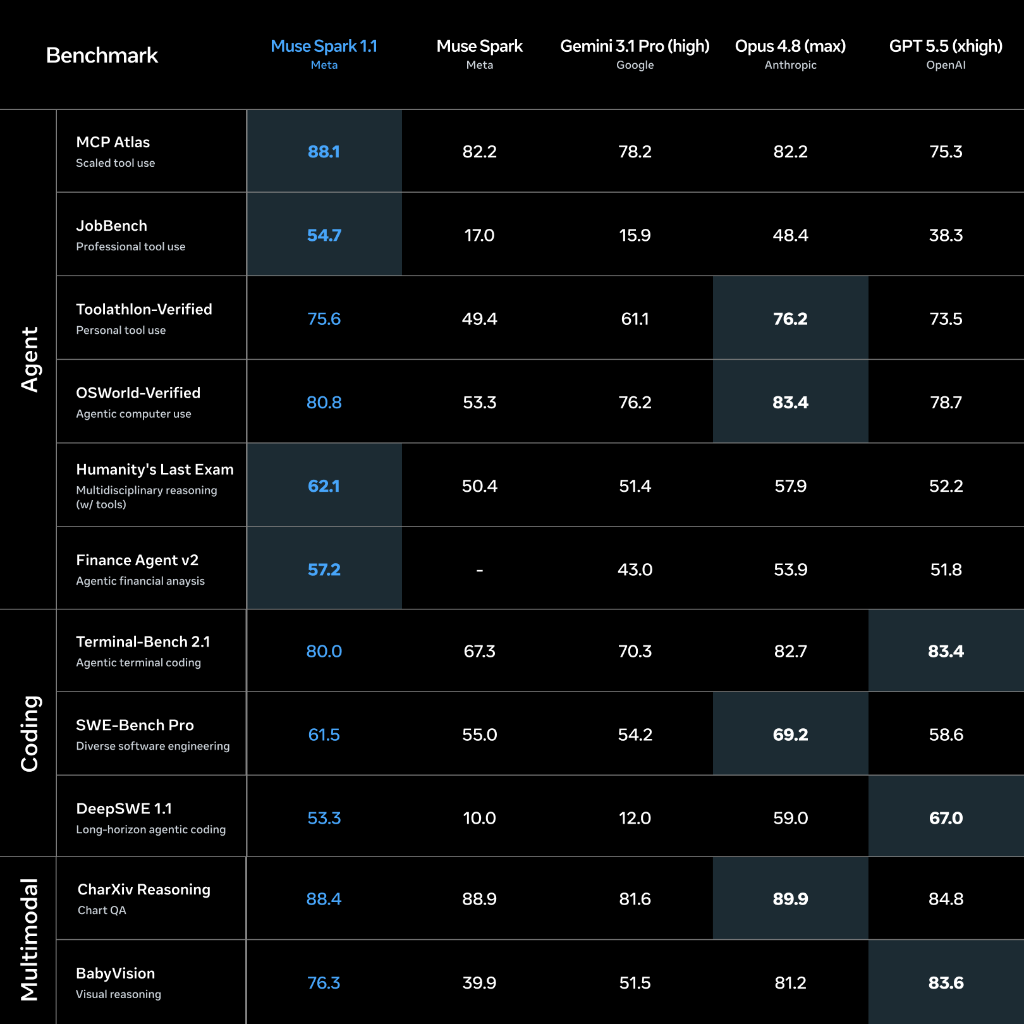
Take a look at how it scores against other AI models when doing real work:
Test Your Knowledge!
Before you head out to build your own AI bots, let's see if you remember the key terms. Click the cards below to flip them!
Senior Developer Systems Breakdown
The Proving Ground: The Codebase Arena
When injected into a codebase, Muse Spark 1.1 becomes a surgical weapon. It is built to diagnose complex bugs, implement features in sprawling enterprise architectures, and execute massive code migrations.
The model zero-shot generalizes to native tools and MCP (Model Context Protocol) servers without fine-tuning. It knows when to write a python script to automate a tedious task, and when it’s faster to just execute DOM interactions directly.
In an OpenCode demo, the model autonomously built a web app, ran it, took automated screenshots to visually hunt for layout bugs, traced those visual glitches back to the CSS/DOM source, and deployed the fix.
Benchmark Deep Dive
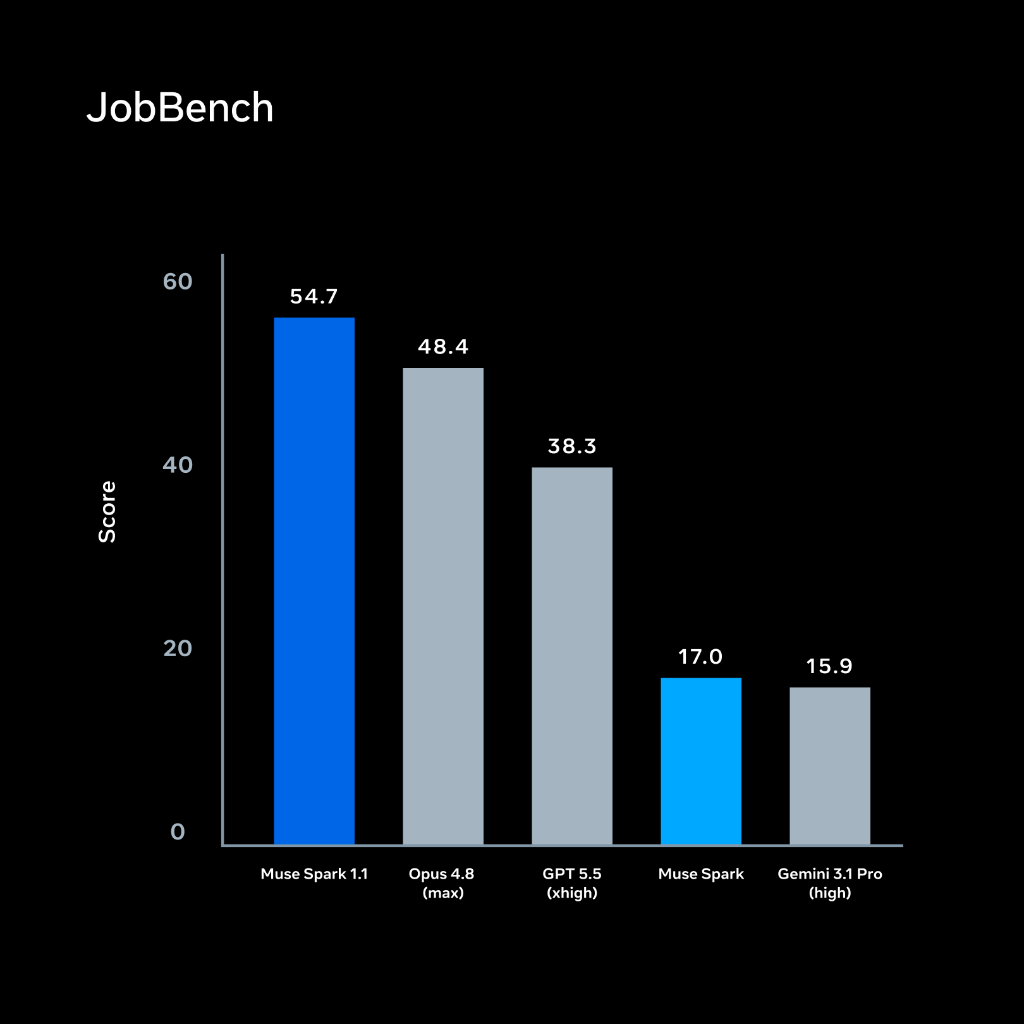
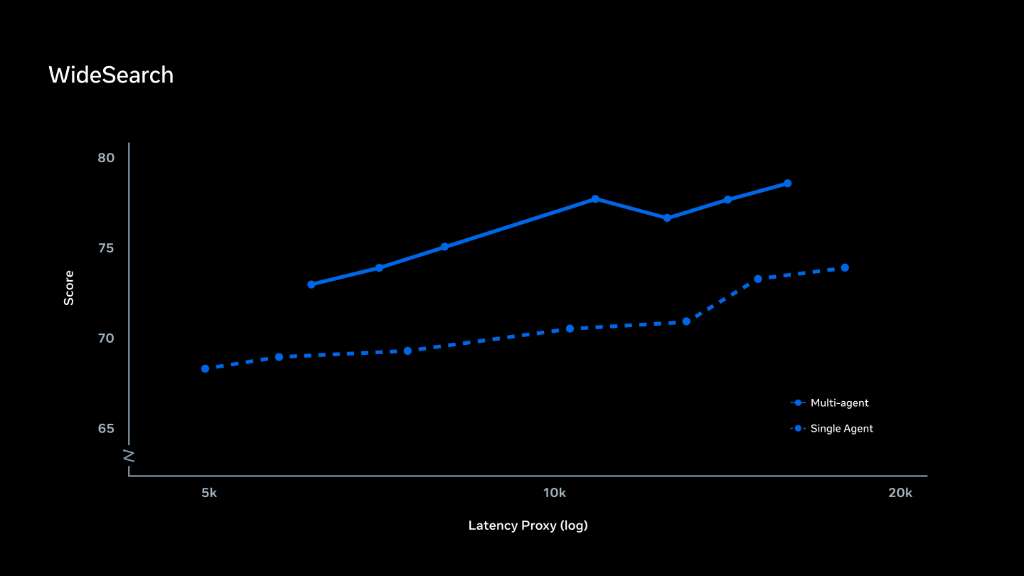
As you can see from the performance data, Muse Spark 1.1 dominates in real-world tool use and long-horizon tasks.
Professional Tool Use (JobBench)
Zero-Shot MCP Integrations (MCP Atlas)
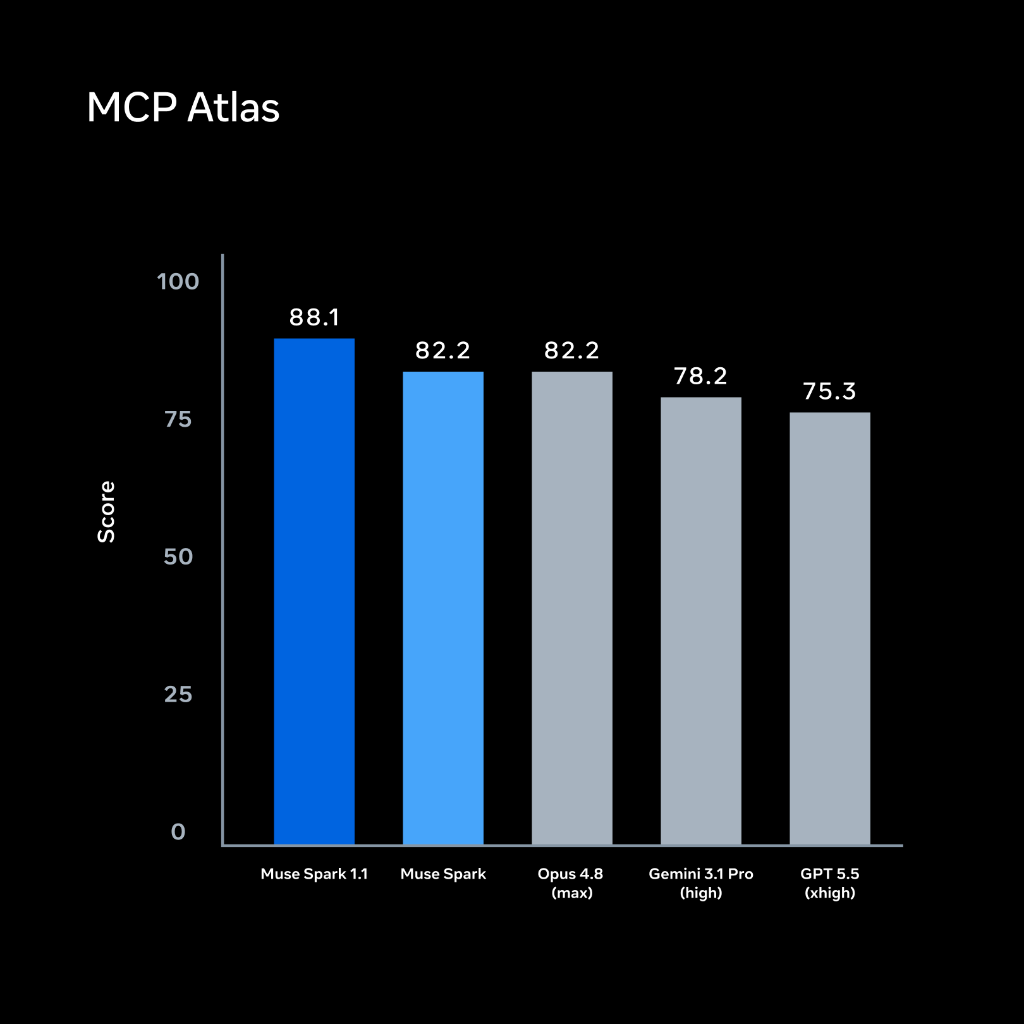
The model's zero-shot generalization to tools like MCP Atlas demonstrates its ability to dynamically understand and use complex developer tools on the fly.
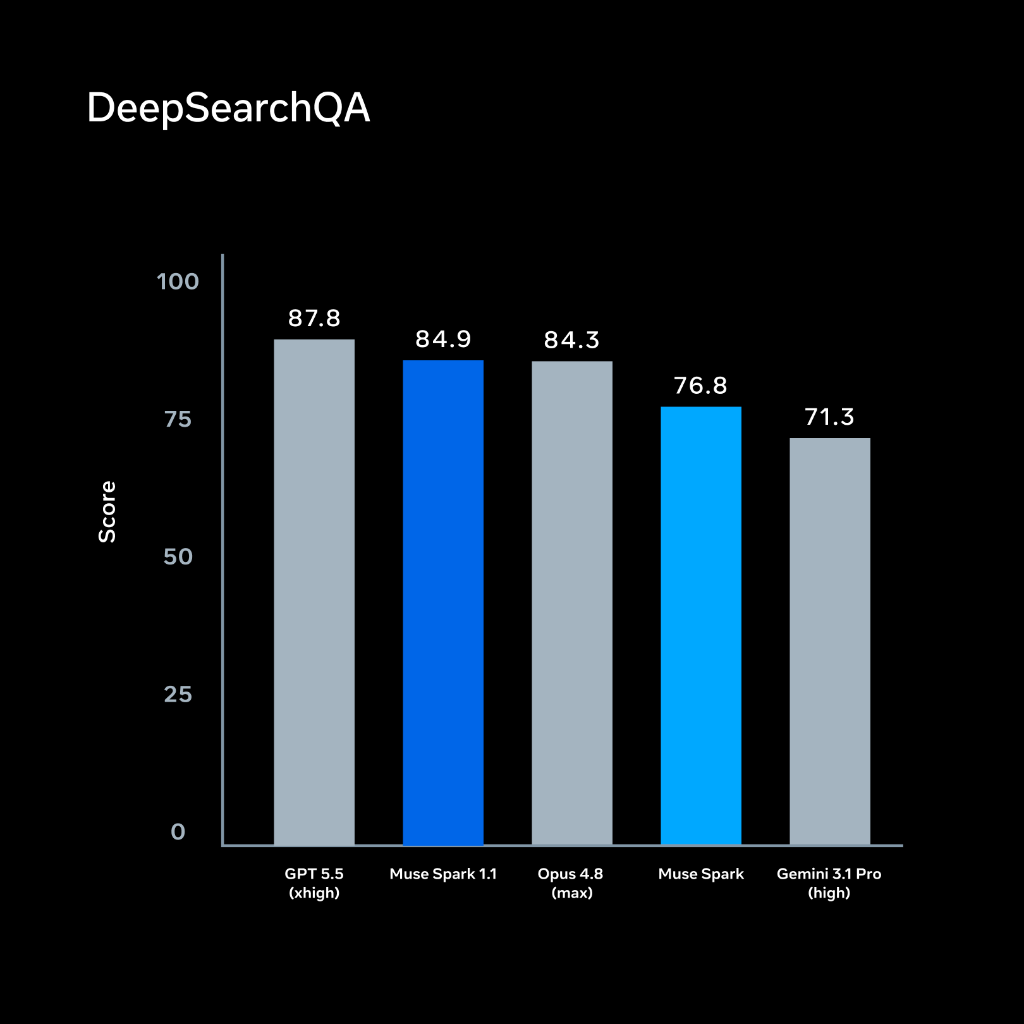
Retrieval & Latency (DeepSearchQA & WideSearch)
Industry Validation
The heavyweights of the AI developer ecosystem were granted early access, and their reactions validate the architecture:
- Amjad Masad, CEO of Replit: Called it "a complete agentic foundation," praising its massive context, multimodal support, and parallel tool calling in an OpenAI-compatible package.
- Saoud Rizwan, CEO of Cline: Highlighted Meta's focus on serious agentic coding and API pricing that makes real workloads viable at scale.
- Yashodha Bhavnani, VP of AI Products at Box: Confirmed it delivered enterprise capabilities competitive with leading frontier models on Box's internal evaluation set.
Meta also evaluated it under their strict "Advanced AI Scaling Framework." Across Cybersecurity, Chemical/Biological, and Loss of Control threat models, the model held the line safely, boasting higher resistance to prompt injections than its predecessor.
Final Checks
Let's verify your understanding of the new API architecture. Expand the flashcards below.
Simplified Overview (ELI5)
The era of the independent AI assistant is here. Muse Spark 1.1 is setting a crazy new standard, and Meta says even smarter models are already on the way. The future is going to be wild.
Senior Developer Systems Breakdown
The era of reliable autonomous agents has arrived. Muse Spark 1.1 sets a staggering new baseline for agentic workflows, and Meta promises even more capable models are already in training. The only question now is: what will you build with it?